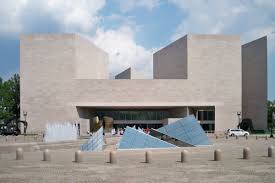
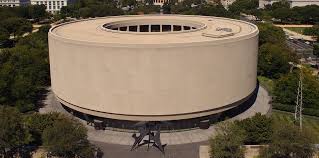
On Saturday, November 10th, 2018 I went on a school field trip to Washington D.C. with my Sophomore Seminar class to visit two art museums. On that day we visited the National Gallery of Art, and the Hirshhorn Museum. It was very cold outside that day, especially when we were all walking from building to building. I thought Washington D.C. was very pretty outside that day, it was full of people walking around the streets and in the buildings. Both the Hirshhorn Museum, and the National Gallery of Art were large buildings with interesting and appealing structures on the outside and on the inside. The first museum we visited was the Hirshhorn Museum. As we entered the museum we had to go through security to get our bags and belongings checked. As my friend and I were being searched by the security, they found pepper spray in my friends bag. So, we had to go outside of the museum and spur the moment decided to hide the pepper spray in a plant. Through the Hirshhorn Museum there was a lot of walking while viewing the interesting and beautiful art throughout the whole building. The building was in a circle formation, with line paintings covering the walls in the hallways. After we were all done walking around the Hirshhorn Museum, my friend and I were very hungry and decided to go look around to find a place to eat! After a little while of exploring places to eat at we decided to just get food from one of the food trucks on the side of the street. I got chicken tenders, french fries, and a lemonade and it actually was not that bad considering it was my first time eating from a food truck. When my friend and I were eating our food outside on one of the benches, the wind was so strong our food and belongings were blowing around everywhere, so we gave up. We decided to walk over to the National Gallery of Art Museum where there was a food court, and I got more food. At the food court I got french fries, a blueberry muffin, and a fountain drink. After finishing up our food in the food court we went back outside to meet up with our other classmates in the sculpture garden before our class went back into the National Gallery of Art Museum. The National Gallery of Art was a very large museum with many unique and exciting displays of art on view for us to see. There was an East and West wing to this museum, but our class stuck to just viewing the art in the East wing for this trip. There was so much art to see in this museum I did not know where to start! I took pictures of all the art in both museums that I was interested in and might of wanted to learn more about. There were many pieces of art I took pictures of and liked, which made me feel overwhelmed because I was not sure what I was going to choose for the piece I found most interesting. Once my friend and I were finished walking around both museums we sat down in this cute little cafe area to figure out what piece was most interesting to us. The piece I finally ended up choosing was created by Byron Kim, called “Synecdocne”, which he made in 1991-present. After picking our favorite piece from this long day in D.C., we all waited for our bus to come pick us up so we could head back home. I was excited to finally go home and go to sleep, but the trip was an exciting time!
Description
Objective Phenomena
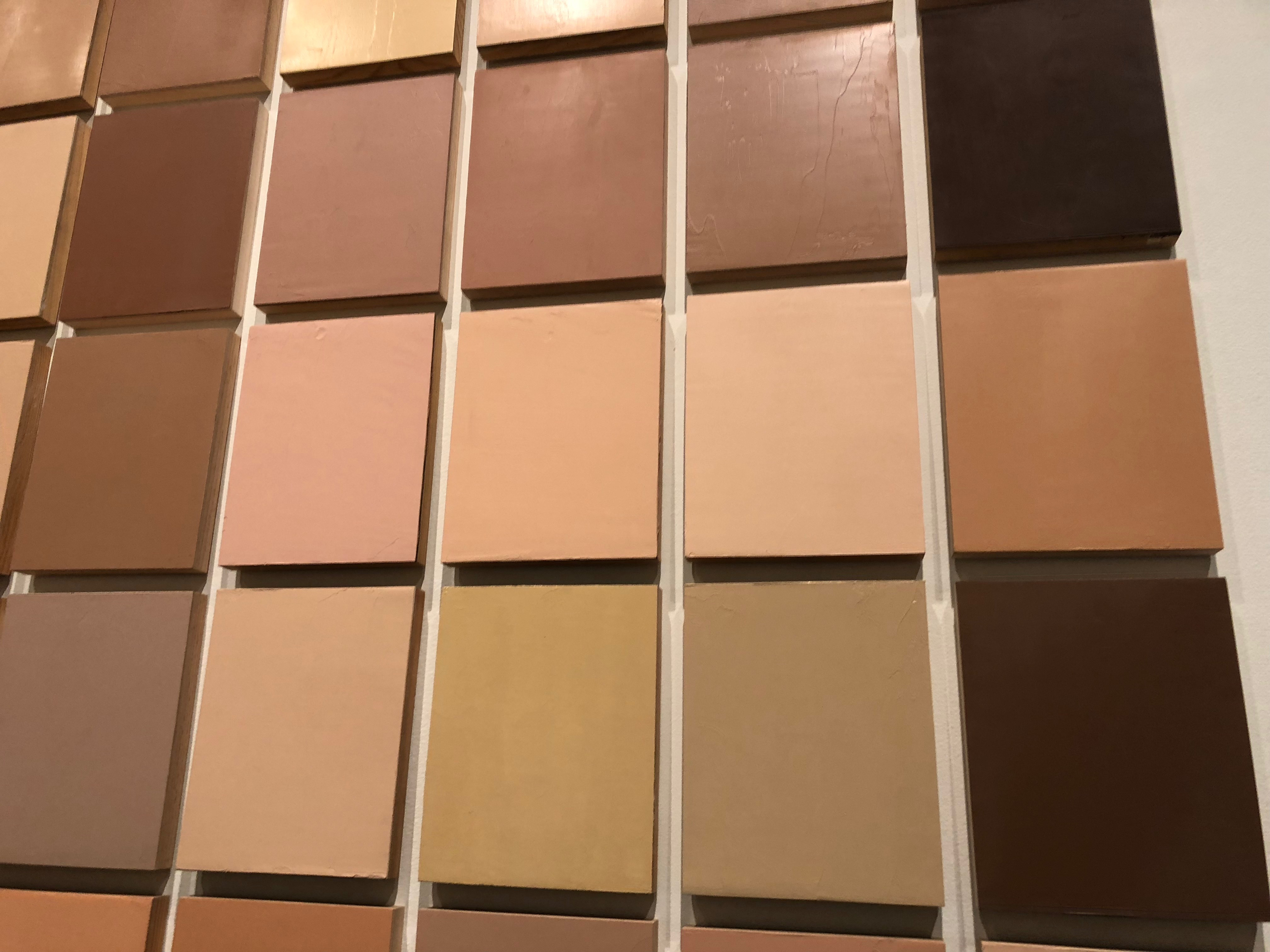
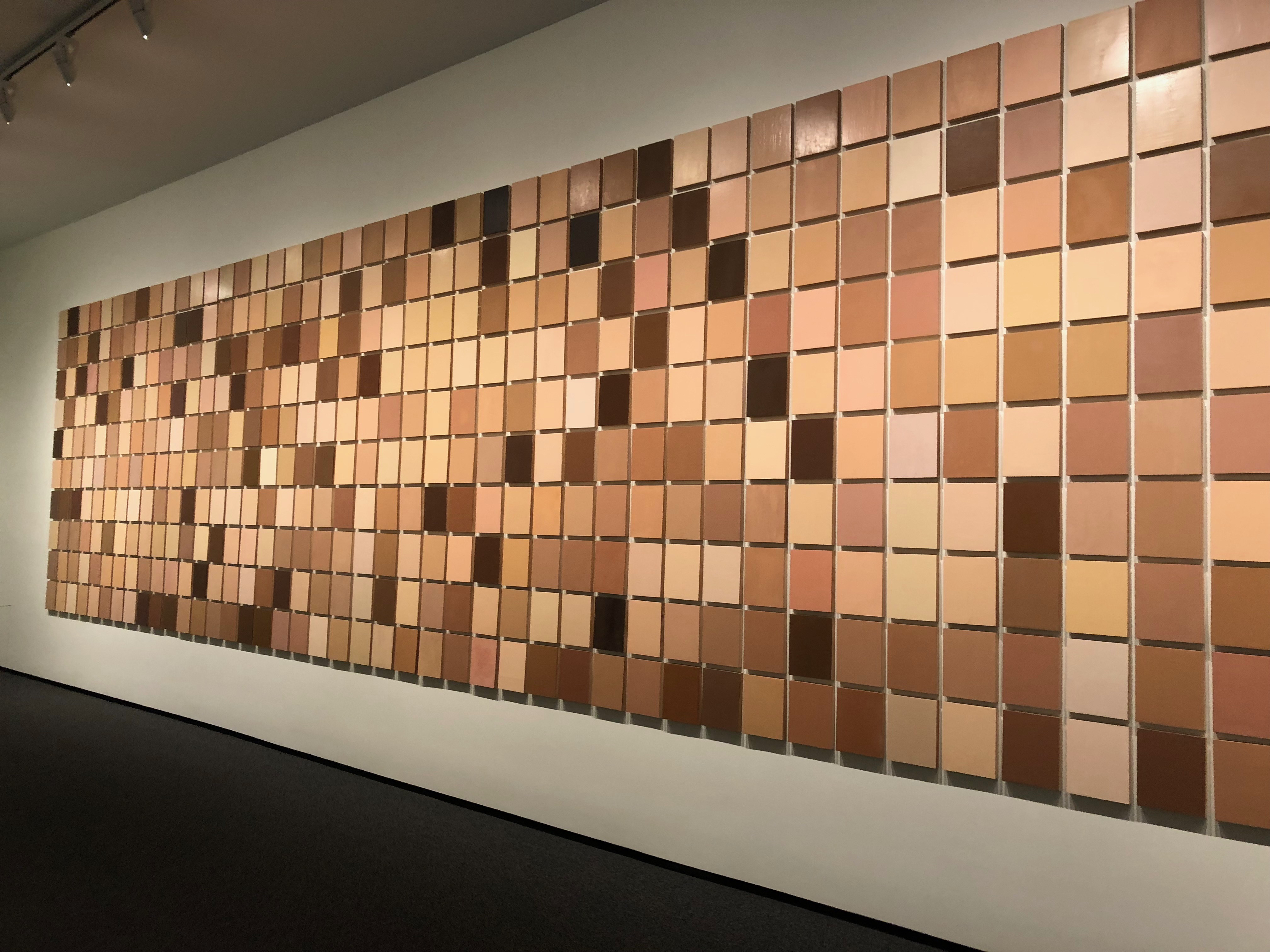
Before I started analyzing and figuring out what the art piece by Byron Kim depicted, I decided to view it without any critical thinking beforehand. Before I read the plaque on the wall that corresponds with the art piece I will be discussing, I observed the colors, shapes, etc. The first thing I saw was the various shades of tans, browns, whites, yellows, and pinks and I immediately related that to human skin tones in my brain. Each color in his piece was in its own square tile placed on the wall. Byron Kim’s work was stretched out along this huge wall in the National Gallery of Art Museum. I chose the art piece, called “Synecdocne” because it really interested me since it was so different and unique from other artists work. Observing this piece in the museum was really cool, each textiles on the wall appeared smooth, and shiny. If you take a step back in person while viewing his work, the textiles look like they are each connected in a huge and long rectangle. Kim made each textile look like it was made from a wood surface, but he left the viewer guessing on what it was made out of because of the appearance. The artist, Byron Kim created his piece, called “Synecdoche” to depict many different people, and many different skin tones. His piece contains 560 “skin portraits” of many individuals, and each square textile on the wall was placed in alphabetical order by their first name. Byron Kim started creating this piece in 1991, but to this day he continuously adds new panels to the wall. This work is called ongoing portraiture, and is figuratively and literally a “body of work”. He created this piece to show the world that just looking at one of his single panels on the wall, one can not assume it is a certain race. Many people can assume particular things about the racial composition. When Byron Kim started making this art piece he realized that there are many white people whose skin tones appear to be black, when they are represented in this certain abstracted manner.
Associations
After viewing and depicting what I saw in the image of the work of art I chose, I saw some associations that can be easily related to this piece. As a viewer, I felt it was important to associate the art piece, called “Synecdoche” with other objects, and items I found relatable! Coming up with associations for this particular piece I found to be quite simple by just relating it to everyday things. In the museum when I took a step back and viewed the panels from a distance it reminded me of polka dots, and or the game connect the dots. I also realized that each textile panels resembled tile floors you would see in someone’s house. Another association to this piece is the tile paint samples you find in Home Depot, and also when I saw this piece I immediately thought of a color palette. The panels could be viewed as bricks to a house or bricks to a fireplace. The panels also reminded me of the Tetris game, and a puzzle that needs to be put together. But overall, each textile panel especially reminded me of a large crowd in a big city or in a concert venue, where you see many different people with different backgrounds, etc.
Emotive Response
The overall reason to why I chose this art piece over others throughout both museums was because of the message it sends out to society, and how it made me feel emotionally. I am someone who has always viewed every human being equally, and skin color does not imply someone’s worth. The message the artist sends out to the viewers is strong and positive showing people that everyone was created equal. I thought the artist created this piece in a thoughtful manner with how he just depicted different skin tones with textile panels. This piece made me feel many different things while viewing it, some of the things I felt was; connective, complex, together, happy, connected, positive, and contented. But I also felt overwhelmed and claustrophobic while viewing it as well because of how tightly placed the panels were, and how there was so many on the wall.
Context
Byron Kim is a Korean-American contemporary artist that was born in 1961, and he is still living to this day at age 57. He is currently living in and working in Brooklyn, New York. The kinds of work he chooses to focus in on and create is work based on racial identity. Kim has created many different works, and in the 1960s he created minimalist paintings with the topic of racial identity. Byron Kim was educated and attended Yale University in 1983, but he also attended the Skowhegan School of Painting and Sculpture in 1986. Earning a BA degree from Yale University, he is also a Senior Critic at Yale as well. His works are part of the Chinatown’s cultural movements because of how he creates art pieces relating to racial identity of the World’s population. Byron Kim’s work, called “Synecdoche” started being created in 1991, and then was exhibited in the Whitney Biennial in 1993, and now it is in the permanent collection of the National Gallery in Washington, D.C. This work of art created by Byron Kim was an exploration of community and race throughout the world. Some of Kim’s major accomplishments was not only have his work displayed in the National Gallery of Art’s collection, Kim’s work is also included in the collections of the Albright-Knox Art Gallery, Buffalo, NY; Art Institute of Chicago, IL; Brooklyn Museum, NY; Hirshhorn Museum, Washington D.C.; Norton Family Collection, CA; Wadsworth Atheneum, CT; Walker Art Center, MN; and Whitney Museum, NY; including other places where his work was featured. Throughout the semester in my Sophomore Seminar class we have learned about, and listened to many different artists come in our class and speak about their lives and about their professional work to us. Byron Kim’s work definitely has key aspects within it that relate to some of the visiting artists we have had over the semester in many different ways. The key aspects that Byron Kim’s work has in it that relates to our visiting artists is how he relates his work to known topics as in diversity, and racial identity. Another key aspect in his work that relates to some of the visiting artists we have had is how conceptual his work is, and how he is able to make it appear simple, even though it is not simple. With Byron Kim being a Korean-American artist living in Brooklyn, New York he sees diversity each and everyday. Kim’s surroundings and his own racial identity both took part in playing a role in coming up with and creating his work. Another ongoing work of art like “Synecdoche”, that Byron Kim has created is his series is called, “Sunday Paintings”. His work “Sunday Paintings” depicts the appearance of the sky every week after recording it with a diary entry to go along with it, juxtaposes the cosmological with the quotidian. I really enjoyed viewing his work, I thought it was put together nicely and neatly and it caught my eye! I was really glad I got to see Byron Kim’s art work in the National Gallery of Art Museum.
Analysis
I will be discussing my personal opinion on Byron Kim’s art piece, called “Synecdoche”, which was created in 1991 and is still being worked on and added to, to this day. My observations and reflections on this piece will show my overall opinion and thought process about Byron Kim’s piece.
Byron Kim is still living to this day full of great ideas and intentions for his art pieces from the past, present, and future. My favorite art piece done by Byron Kim was for sure his “Synecdoche” piece. The topic of his piece “Synecdoche” was racial identity, depicting various skin tones of many different people in the world. Learning about this particular piece and also learning about Byron Kim has been very interesting to me. After I observed his work on the wall at the museum, I went up to the plaques on the wall that shared the description about the piece and I read about it. I learned that Kim made this piece with oil and wax on lauan plywood, birch plywood, and plywood. In the museum under the description of how the piece was made there is a huge rectangle with individual squares, and each square has the name of the person in order of whose skin tone appears on the wall. Next to every persons name on the wall is a description about this work and a description about what Byron Kim thinks about this work. Kim’s intentions for making this piece was to show that assumptions are not always correct based on what you see because he said he knows that there are many white people that appear to be black in this severely abstracted manner. That is why he used panels to depict the skin tones on the wall, so the viewer would only see the color and not the person. Byron Kim also explains that with this piece it goes to show that there are many different colors and variations of one single person on their body, and those colors do in fact change over the course of the year based on seasons. The meaning of Kim’s work was to show how racial identity is a big factor in society to this day, and how people should not assume ones race based on skin tone because of the other factors that play a role. Another meaning of his work was to show how all skin tones are beautiful, and how everyone was created equally. Byron Kim’s work was a success with how he created it because he did it conceptually, which made the work stand out and show the purpose of his meaning. I think his work was also a success because right away I knew without reading the plaques on the wall that his work had something to do with race, and skin tones. Personally I think this work was created very well, and got the point across respectively. Kim used all variations of skin tones to pin point every race, which was a great idea. I think the arrangement of his piece was laid out and presented successfully because it was a simple huge rectangle, and if he presented the piece in a more complicated way I think it would not of been as successful. Overall, there are many more reasons to why I chose this particular piece from the museum, but these are just some of my main reasons as to why I chose it.
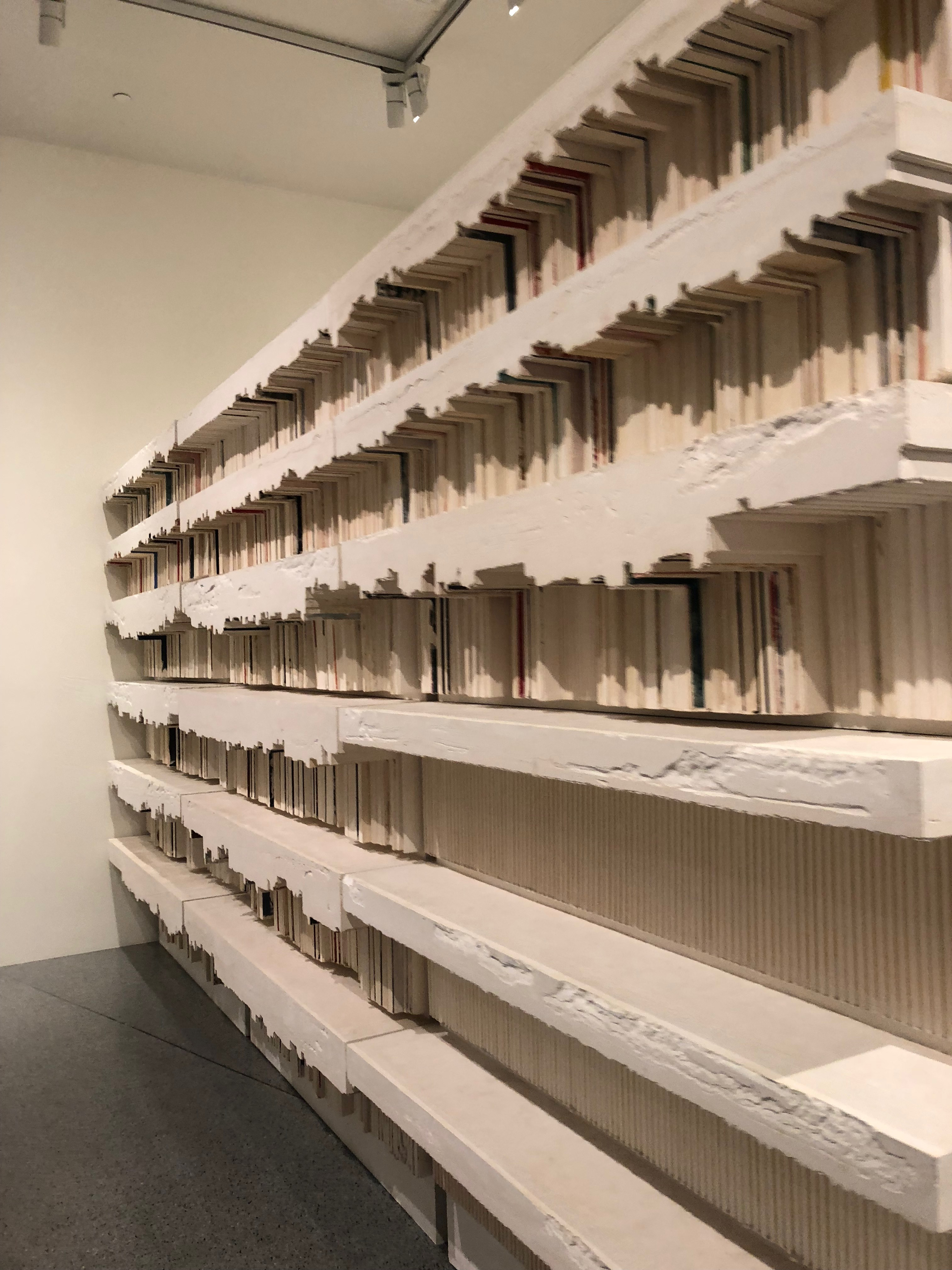
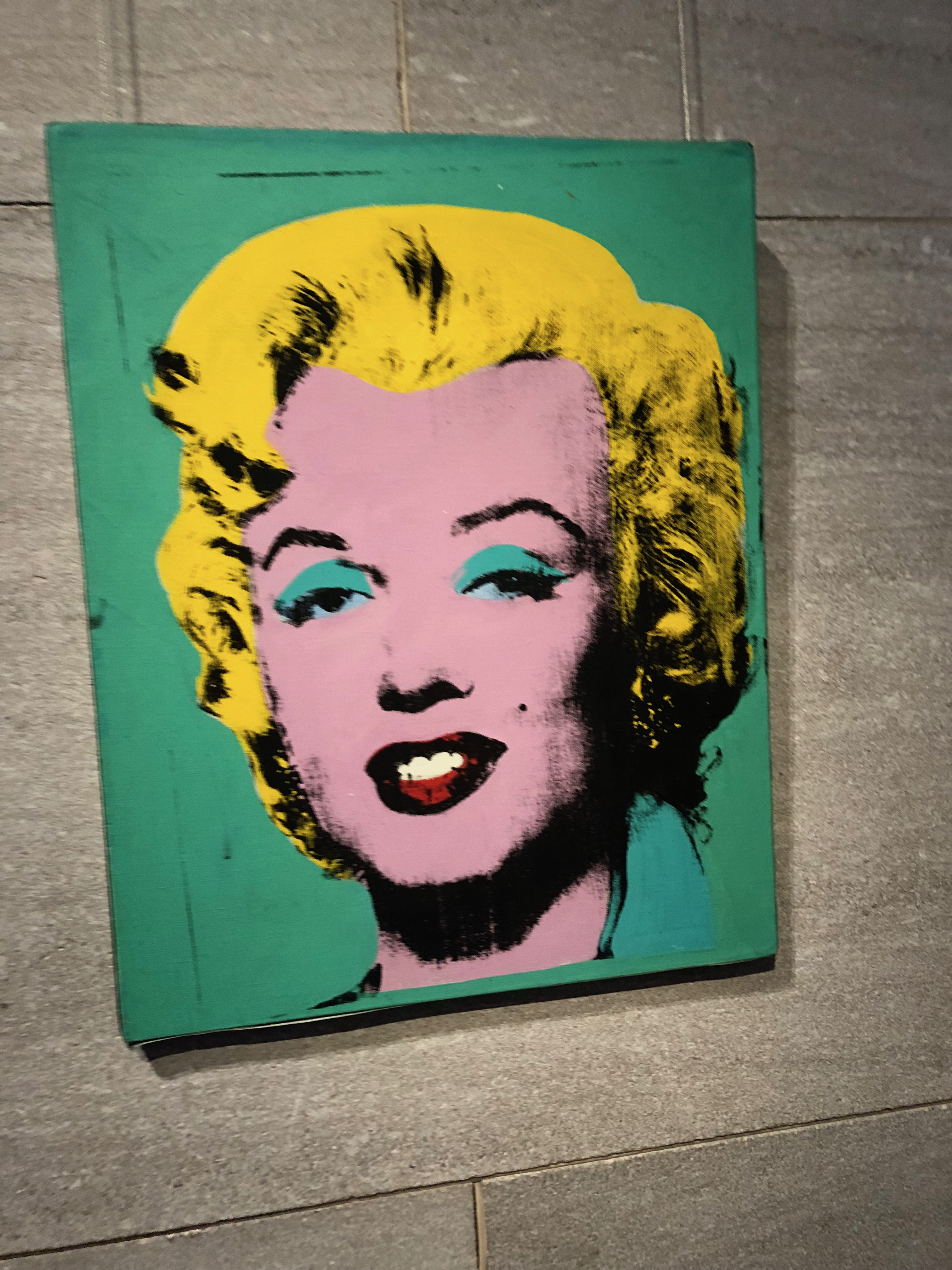
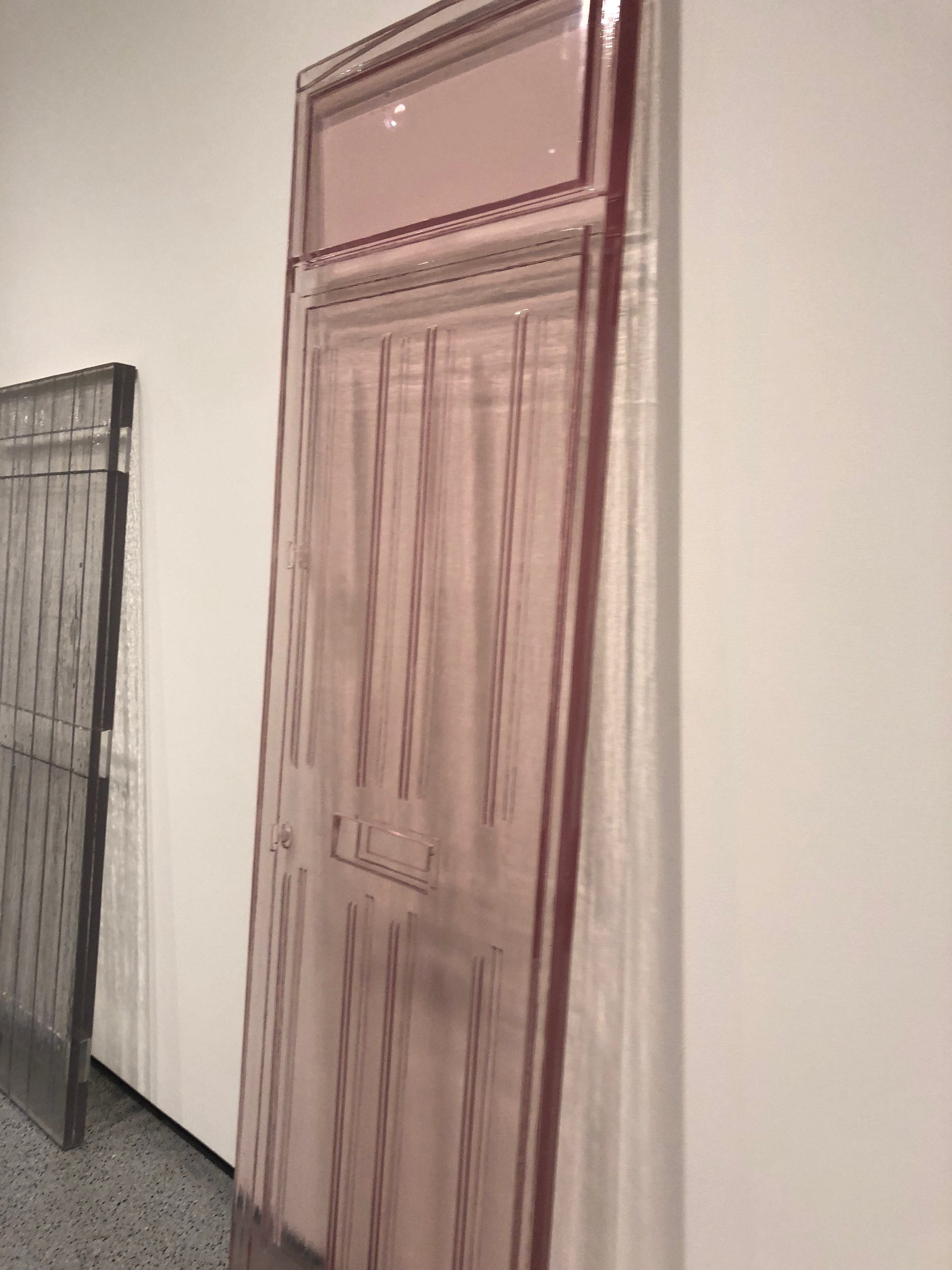
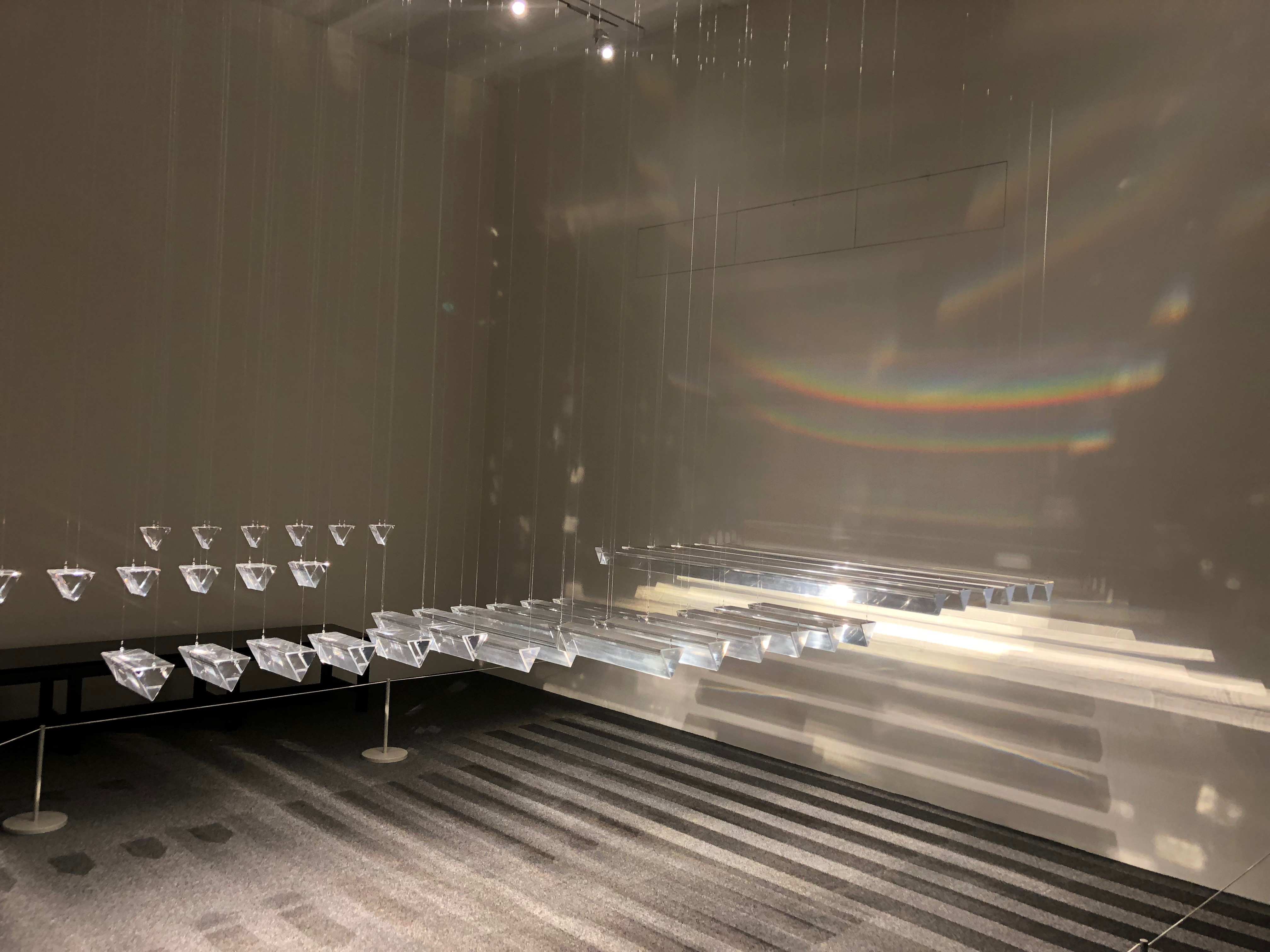
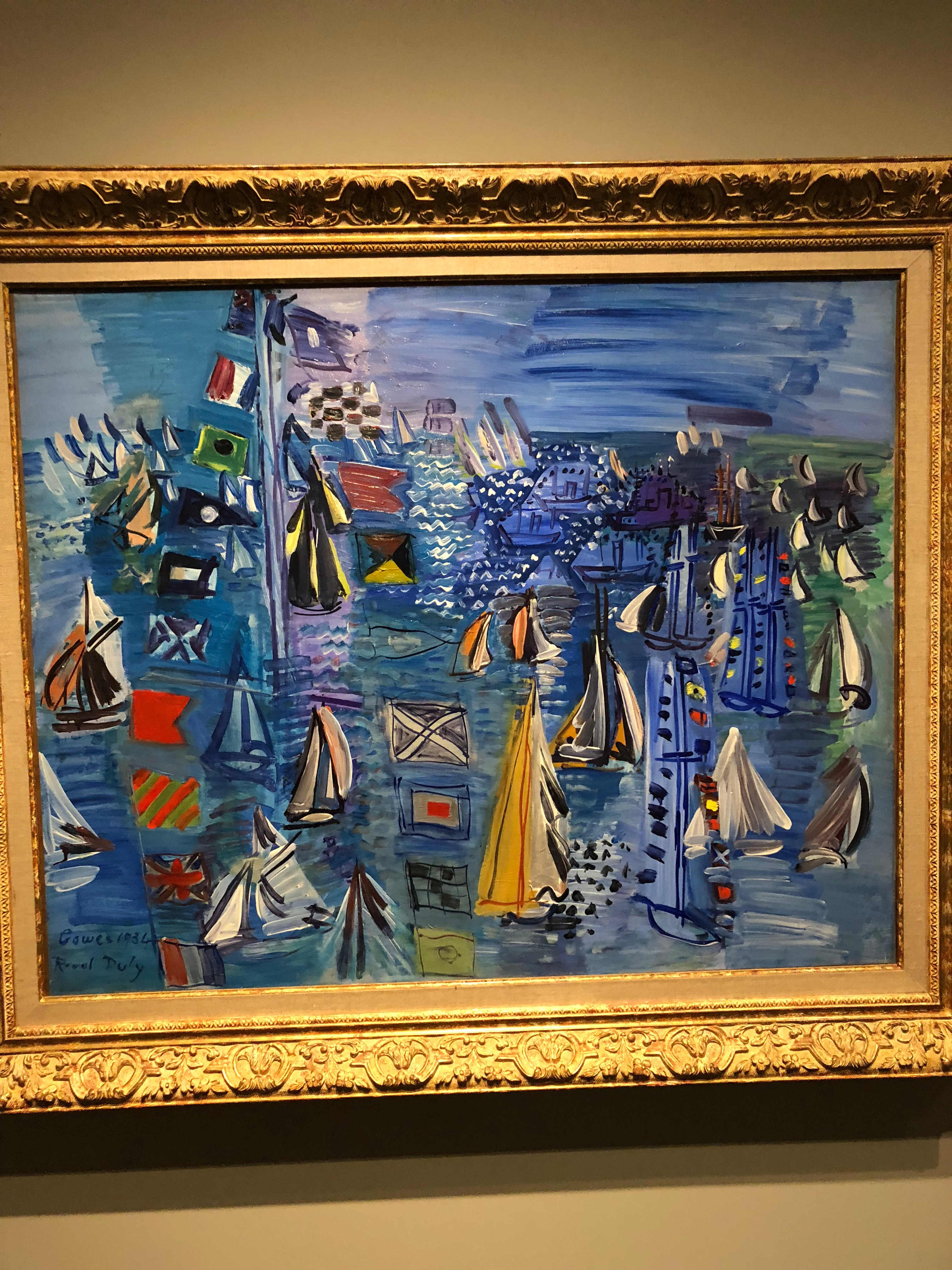
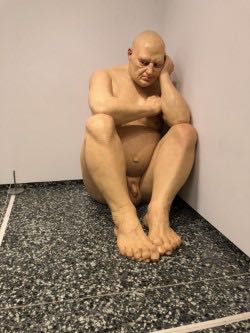
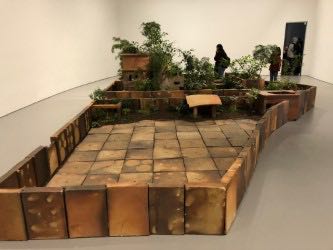
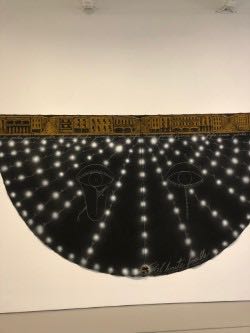
The following images above are other artworks I found interesting throughout both museums!

 Museum Experience Blog